
The impact of COVID-19 on teaching and learning in higher education: CUT lecturer shares her teaching experience during the pandemic
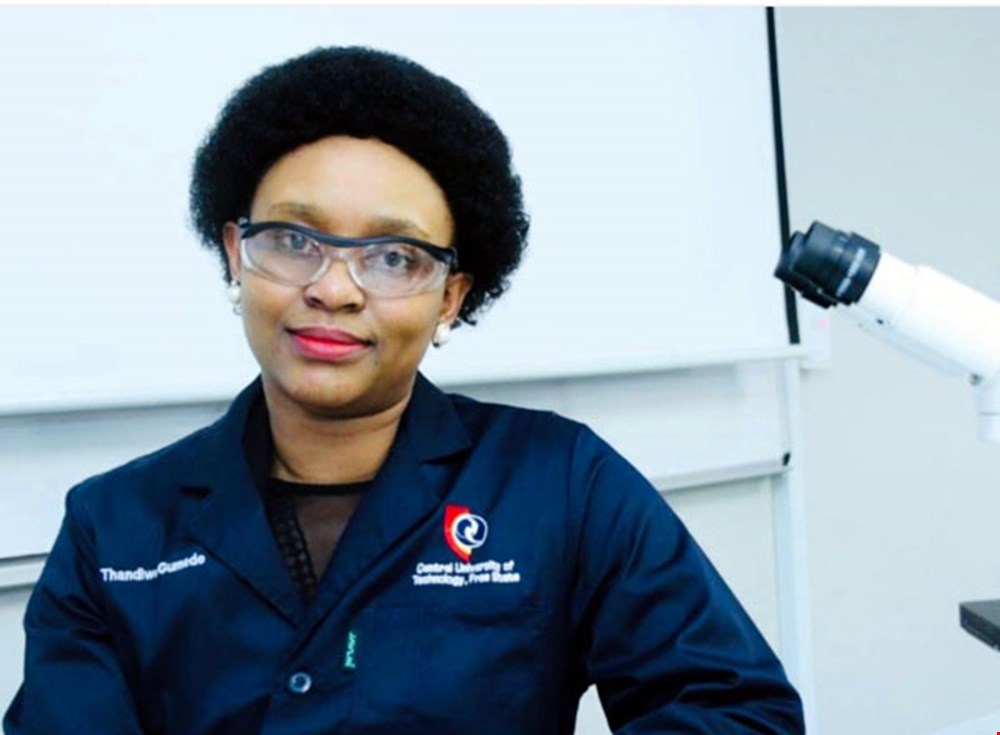
When the COVID-19 pandemic struck, it brought extreme disruptions to the higher education sector and changed the approach of teaching and learning drastically. This shift brought shockwaves and a lot of challenges and uncertainties to the students and lecturers in the higher learning sector. For some, the sudden change forced adjustments in teaching and learning, while for others, the change came at the greater costs of adjusting to internet connectivity glitches, virtual meetings, extended academic programmes and others.
Despite these challenges, Dr Thandi Patricia Gumede, Chemistry Lecturer in the Faculty of Health and Environmental Sciences, was among the Central University of Technology academics who pushed on to contribute to teaching and learning. She took the time to share her teaching experiences during the pandemic. She said circumstances caught them unprepared and forced them to experiment with online teaching and learning and how she learnt to adapt and respond to the challenge. She highlighted that the sudden change came unexpected but left them with valuable lessons that they will always embrace. She further said that the experience also taught them that one must not be too comfortable in all they do. “The situation forced us to explore other methods - digital platforms, to accommodate the new ways of doing things. Honestly speaking, online teaching was not easy. However, the unwavering support from the e-learning team made it possible to develop digital and pedagogical tools to teach effectively in remote settings. The e-learning team was available to assist us from 08:00 to 16:30 - Monday to Friday. They assisted us in understanding the key features of online platforms, using appropriate teaching methods and technology, monitoring students’ engagement and progress in lessons, designing interactive learning activities, as well as setting online tests and assignments. We are grateful for that,” she said.
Gumede mentioned that the unexpected online teaching method taught her that learning could take place anywhere. “As a lecturer, I learnt that I need to be versatile and be prepared to teach in any mode presented before me by any unforeseen situation (online, hybrid, face-to-face). I also learnt that I should be able to incorporate all these teaching methods even post COVID-19. This whole experience has taught me the importance of technology even though it is insufficient or reliable to facilitate remote learning. Regardless of the learning modality and available technology, as lecturers, we still play a critical role in clarifying some concepts that students might find complicated in a pre-recorded lesson. The experience has also taught me that ongoing teacher professional development is key.”
She also indicated that COVID-19 had opened doors for many positive things in her career. “I enjoy working from home more and am much more productive when working from home. I managed to produce more research outputs and human capacity development than when I am working on campus every day.”
Asked whether the university supported her during these trying times, Dr Gumede said, “indeed, the university provided the necessary support needed during the pandemic. We had staff development training workshops from the e-learning team, such as the lockdown training eThuto 000, the eThuto lecturers support, WhatsApp group etc. They also provided us with some helpful tips on how to stay in touch with students when they could not get to campus. They also made provision for data and provided working tools to support our students.”
Asked whether she prefers online, hybrid, or face-to-face teaching, she emphasised hybrid “because a hybrid class adapts better to student learning styles than a fully online or a fully face-to-face class can. For example, auditory students may benefit from the ability to rewind prerecorded lectures, while visual learners can study slides at their own pace. Meanwhile, students who benefit from face-to-face classes can still connect with their lecturers and fellow students.”
She said that although this new teaching method brought some positive results for her, she also encountered challenges along the way. Some of the challenges she experienced include unstable internet connection, load shedding, limited/insufficient data for students, which resulted in low-class attendance, inadequate computer labs and lack of computers/laptops access. “Teaching chemistry concepts requires drawing of chemical structures, and mechanisms, to ensure that all students are following, and no one is left behind but doing this online was a challenge. First, you have to deal with students who are copying from one another, and who do not totally understand anything you are trying to explain.”
When asked how she would have handled the situation if she had been the Vice-Chancellor of this university, Dr Gumede said she would recommend the hybrid learning mode rather than complete online learning. “I would allow half of the class to attend on-campus and the other half online. I believe that this would allow students to participate equally, no matter their circumstances.”
When sharing her thoughts about the 4th Industrial Revolution and whether the university is there yet, she said that 4IR is about changing opportunities for real human connection, learning, and growth. “I do not think we are there yet. However, we are evolving into the 4th Industrial Revolution. For example, our institution has digital body temperature scans in some buildings. This limits human connection, however, there are still things that robots cannot do, so at the end of the day, people are still needed to do some work,” she concluded.
Caption
Dr Thandi Gumede, Lecturer in the Faculty of Health and Environmental Sciences.


