
CUT paints campuses black and purple to honour victims and survivors of GBVF
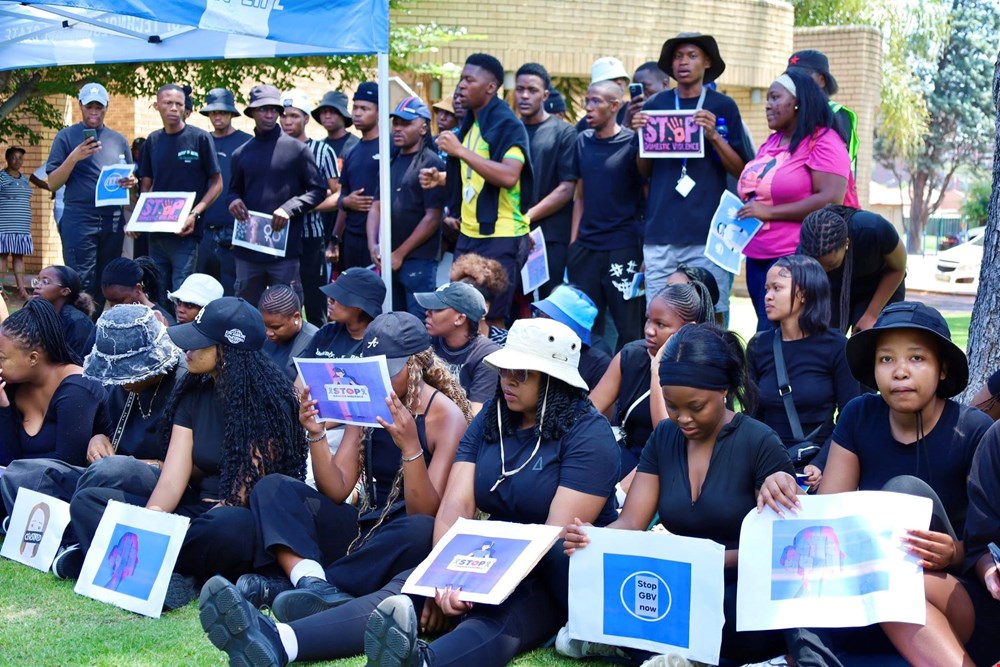
CUT community united in a powerful display of solidarity against the ongoing pandemic of Gender-Based Violence and Femicide (GBVF). Staff and students across both campuses dressed in black, with a touch of purple, symbolising mourning, resistance, and hope for change. The silence is too loud, each quiet moment filled with the weight of pain, resilience, and a fierce call for change. Here, CUT students sit in solemn solidarity, honouring survivors and demanding an end to gender-based violence.
Gender-Based Violence and Femicide (GBVF) remains one of South Africa’s most harrowing and entrenched crises. Each day, women and children are sexually violated, trafficked, abused, or murdered often at the hands of those they know and trust. Despite sustained national campaigns, awareness drives, and legislative reforms, the country continues to record some of the highest rates of femicide, sexual assault, and intimate-partner violence in the world. The persistence of these crimes underscores not only the depth of the crisis but also the urgent need for comprehensive, society-wide action.
The Central University of Technology, Free State (CUT) joined thousands of South Africans on 21 November 2025 in the nationwide Purple GBVF Awareness Movement, demonstrating a unified stance against gender-based violence and femicide. Students and staff across the Bloemfontein and Welkom campuses took part in a solemn 15-minute silent march, dressed in black with symbolic touches of purple to honour survivors, remember victims, call for urgent societal change and reaffirm the institution’s unwavering commitment to confronting gender-based violence in all its forms.
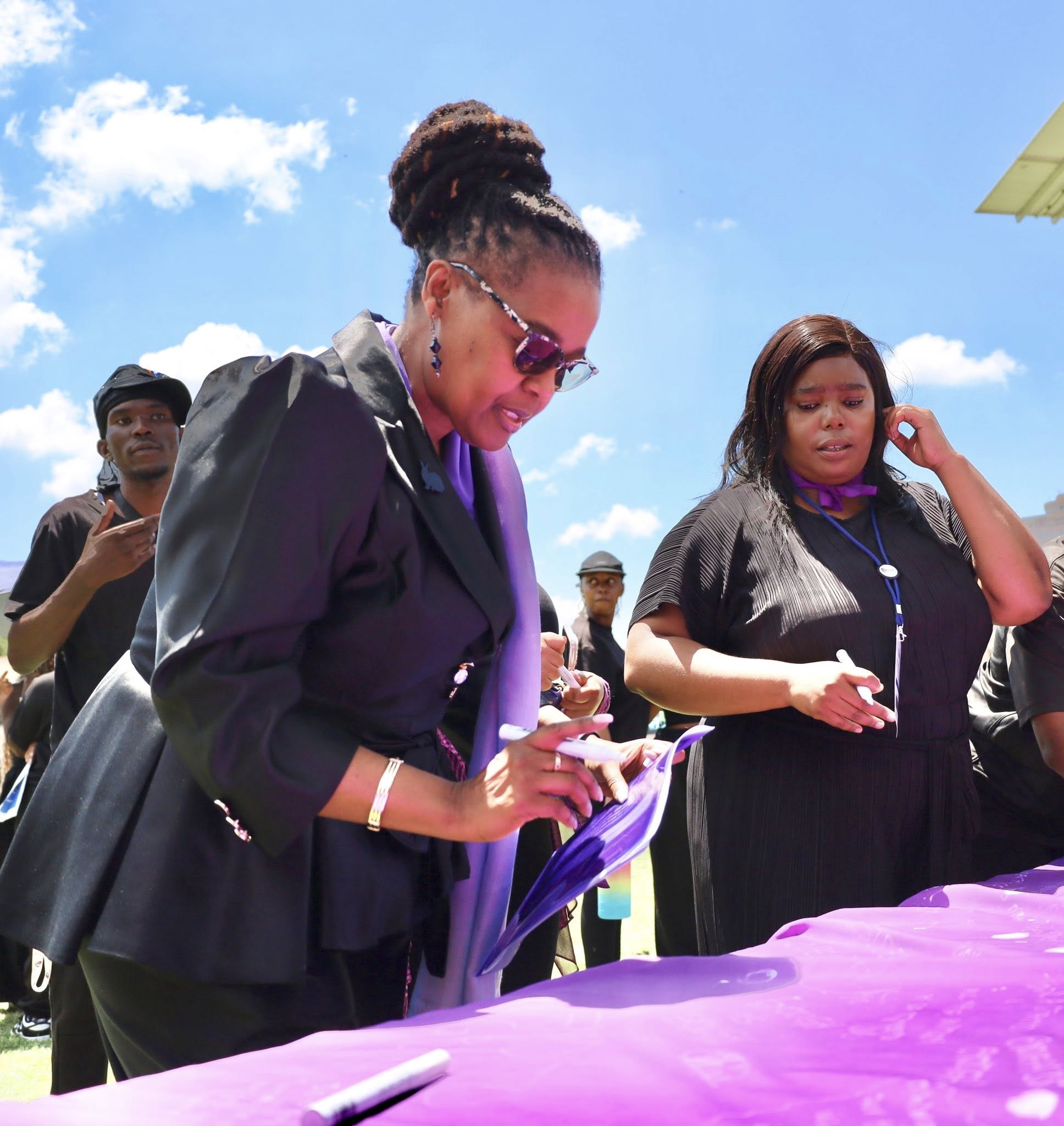
Leadership reaffirms CUT’s commitment: Prof. Pamela Dube shares her message of hope as CUT reaffirms its united stance against GBV, joined by Dr Mantoa Molete. As South Africa enters the 16 Days of Activism, CUT reminds the nation that every voice matters, every person deserves safety, and a future free from violence is possible through collective resolve.
CUT Vice-Chancellor and Principal, Prof. Pamela Dube, delivered a message highlighting the institution’s resolve and collective responsibility. “CUT joins South Africans nationwide in the Purple GBV Awareness Movement, standing united against gender-based violence and femicide. This initiative reinforces CUT’s commitment to a campus free from sexual harassment, sexual violence, gender bullying, and all forms of gender-related misconduct. As we enter the 16 Days of Activism, we must continue strengthening awareness, promoting accountability, and creating spaces that honour survivors and support one another.” Her message highlighted the urgency of sustained engagement and the need to create spaces where survivors are heard, believed, and supported.
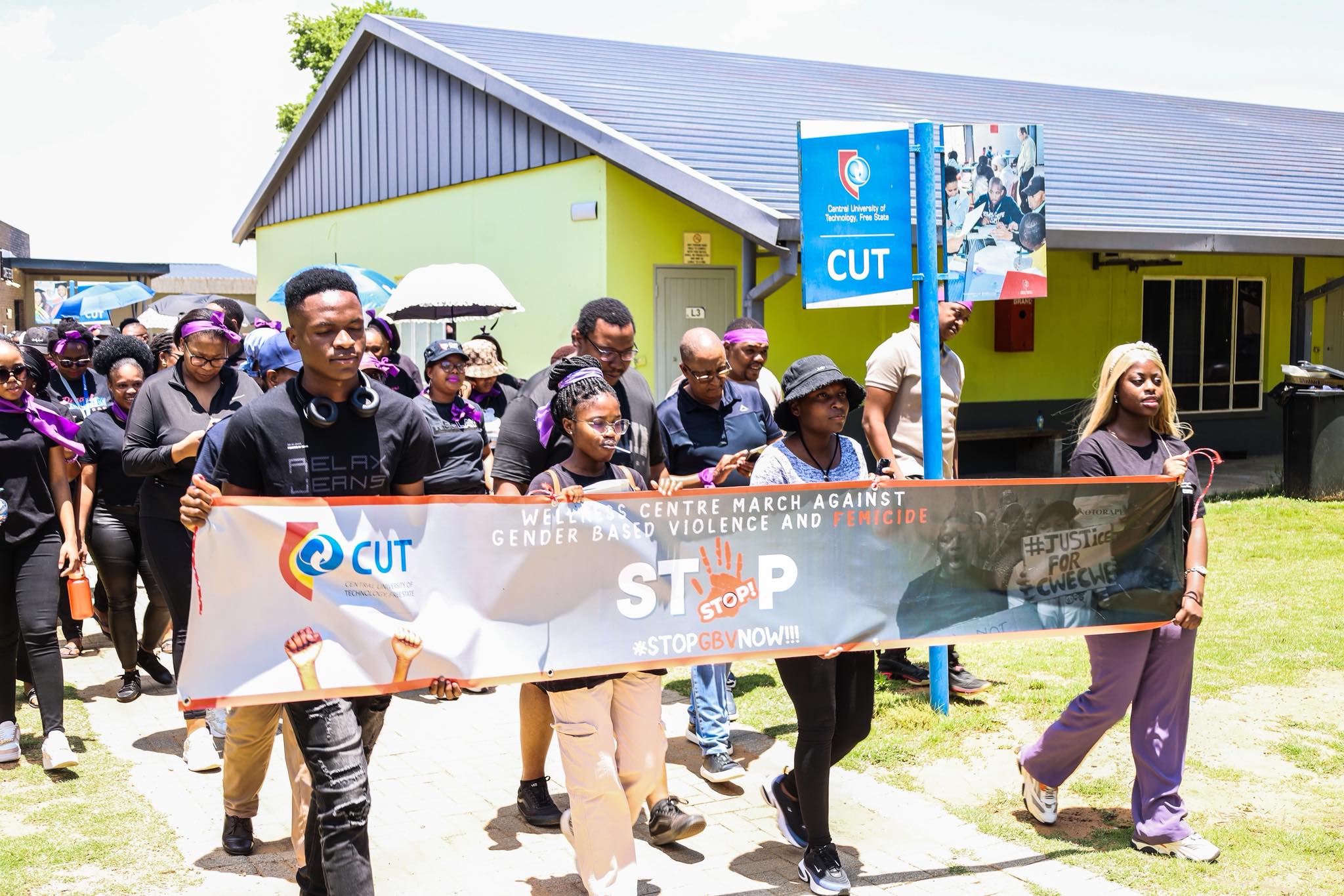
Welkom Campus: A collective act of reflection: In a powerful moment of quiet strength, Welkom Campus students and staff walk together against gender-based violence. Each step echoes a shared declaration: enough is enough.
Meanwhile, at the Welkom Campus, students and staff gathered and marched in thoughtful silence against gender-based violence, each step echoing a shared declaration: enough is enough!
Assistant Registrar Ms Jubee Mawoyo urged the CUT community to act with intention in the fight against GBV, emphasising that solidarity must go beyond symbolism. “We gathered to support those affected by GBV and to move forward with hope, courage, and determination toward a future free from violence,” she said. Mawoyo highlighted that the movement cannot be a once-off gesture but demands presence, empathy, and a willingness to listen without judgement. Her message was clear: ending GBV requires not just awareness but active, compassionate engagement.
Messages that speak beyond the moment
Following the marches, participants from both campuses penned messages of solidarity, reflection, and hope on purple cloths displayed across their respective fields. These written reflections formed a vivid tapestry of commitment, each message a reminder of the university’s shared responsibility to challenge harmful norms, uplift survivors, and nurture a culture anchored in compassion and accountability.
Among those standing in solidarity was fourth-year B.Ed student and father, Vani Chaka, who said he marched for “all the women and children whose bodies have become crime scenes,” adding that he refuses to accept this reality for his daughter or any child in South Africa.
For Katlego Magwatane, a third-year Office Management and Technology student, the day marked another step toward restoring women’s safety and dignity. “Women no longer feel safe in this country. This movement is about awareness and real policy change so women can live freely and without fear,” she said.
Caroline, from Estates and Infrastructure, attended to honour survivors who continue to suffer in silence. She reminded the community that support is available: “We might not always see you, but we are here for you. Speak up and reclaim your voice.”
CUT’s participation was more than symbolic; it was a call to collective responsibility. The message was unmistakable: South Africa can no longer afford silence or indifference. True progress will only be possible when all women and children can live without fear.
Did You Know?
Recent national data paints a stark picture of South Africa’s gender-based violence crisis. Research by the Human Sciences Research Council shows that a third of South African women over 18 have endured physical violence, most at the hands of intimate partners, while nearly 10% have experienced sexual violence. Police records from April 2023 to March 2024 reveal the killing of 5,578 women and 1,656 children, marking a sharp 33.8% rise in femicide. In the same period, more than 42,000 rapes were reported, despite estimates that as many as 95% of rape cases never make it to the police. The violence intensified between July and September 2024, when 957 women were murdered, over 1,500 survived attempted murder, and more than 14,000 were violently assaulted. WHO-linked data further highlights the severity: South Africa’s intimate-partner femicide rate stands at 12.1 women per 100,000, five times the global average.
These figures highlight a harsh reality: GBV in South Africa is not just widespread, it is deeply systemic, persistent, and lethal.


