
CUT faculty hosts the inaugural Research Centre on Human Technology interaction workshop to reimagine knowledge in a technological age
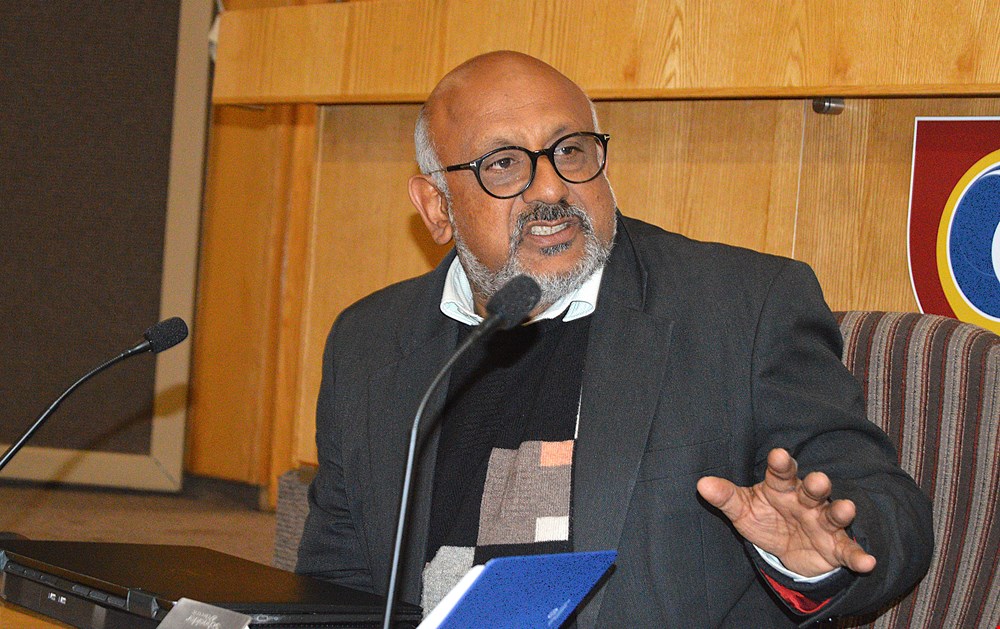
Prof. Premesh Lalu, a distinguished academic in human-technology studies, delivered a thought-provoking keynote that called on universities to rethink their role in today’s world.
The Faculty of Engineering, Built Environment, and Information Technology (FEBIT) under the tutelage of Prof. Wendy Setlalentoa, acting Deputy Vice-Chancellor Research Innovation and Engagement, recently kicked off its first workshop for the Research Centre on Human-Technology Interaction (CHTI). This exciting event was not just about driving technological innovation; it also aimed to create a space for a meaningful dialogue among academics and students about the future together. It explored the opportunities and challenges of rapid technological advancements while highlighting the critical need for ethical solutions.
Prof. Wendy Setlalentoa, acting Deputy Vice-Chancellor Research Innovation and Engagement, spoke about the vision behind the centre, which is to build a collaborative hub where ideas from engineering, ethics, business, the arts, and the social sciences could converge to tackle society’s most pressing questions.
“Our goal is to create a space where experts from diverse fields can come together to address the most pressing challenges of our time. As technology continues to evolve, so must our understanding of its impact on individuals, communities, and the environment,” she said
Prof. Premesh Lalu, a distinguished academic in human-technology studies, delivered a thought-provoking keynote that called on universities to rethink their role in today’s world. He highlighted that technology is no longer optional but a part of our everyday lives. “We all use technology, but our experiences and relationships with it vary greatly, and we also recognise how it affects our lives, work, and futures.”
He called on universities to become centres of knowledge and ethical leadership in this new era. “Humans have co-evolved with technology for centuries. We will not be a species without technology. What happens when you don't think about where the people using that technology are being taken? Universities must be the place where we ask those difficult questions.”
Prof. Lalu called for a study to understand technology's impact from an African perspective and rethink how we relate to it ethically, politically, and socially. He noted that the establishment of the CHTI comes at a time when the world is grappling with profound technological shifts, such as the rise of AI, increasing automation, and the growing digital divide.
“This centre could not have come at a better time. Universities like CUT may be needed to guide the world in reimagining how humans and technology interact responsibly, equitably, and globally,” he concluded.


