
Speakers discuss challenges associated with food safety and security at the CUT Africa Day Symposium
The Centre for Global Engagement (CGE) held a hybrid symposium at the CUT Welkom Campus under the theme: “Strengthening Resilience in Nutrition and Food Security on the African Continent”.
In his message, the acting Vice-Chancellor and Principal, Prof. Alfred Ngowi said that it is not by chance for CUT to host annual Africa Day celebrations to acknowledge her successes. Instead, the interim Vice-Chancellor and Principal commended all role players for Africa's progress under this theme while reflecting upon the common challenges that the continent faces in a global environment. He added that the sudden emergence of the COVID-19 pandemic has exposed the economic vulnerability of most African countries, including the health and food systems. “Africa Day 2022 celebration aims at addressing food insecurity by ensuring access to food and nutrition for the most vulnerable groups, including students, the elderly, and other at-risk groups. “Food and nutrition security are crucial components of individual resilience, but they can also improve the resilience of entire economies by enhancing individual health and productivity," he added.
Other speakers debated topics such as ethical challenges associated with food safety and security, challenges in the agricultural value chain, agribusiness and its role in food security and the significance of growing your food as a means of sustainability.
Prof. Laetus O.K. Lategan, Research Professor: Research Education & Postgraduate Development presented ethical challenges associated with food safety and security.
He mentioned food terrorism as a deliberate attempt to contaminate food for human consumption. “Food security has become a challenge due to genetic manipulation, climate change, limited water resources and many developing countries who are not in a position to provide for their citizens’ basic food needs. Although not the same, the challenge of food safety can be added too.”
He further said that “although there can be enough food in a country, not all people may have access to it or access to quality and nutritious food. Food terrorism (associated with bioterrorism) is a growing reality in a global terrorist environment.”
“Another development is the emerging philosophy of slow living in which food, vegetation, and foresting (harvesting) play an important role in changing a materialistic lifestyle.”
In his conclusion, he said that the emergence of the COVID-19 pandemic has impacted all parts of human society, including agriculture, manufacturing, and tertiary sectors involving all service provision industries. “The economic and social disruption caused by the pandemic is devastating, and people are at risk of falling into extreme poverty, while the number of undernourished people, currently estimated at nearly 690 million, could increase by up to 132 million by the end of the year.” He appealed to societies to consider rethinking their lifestyles, support sustainable development, join efforts, stop food waste, and consume responsibly.
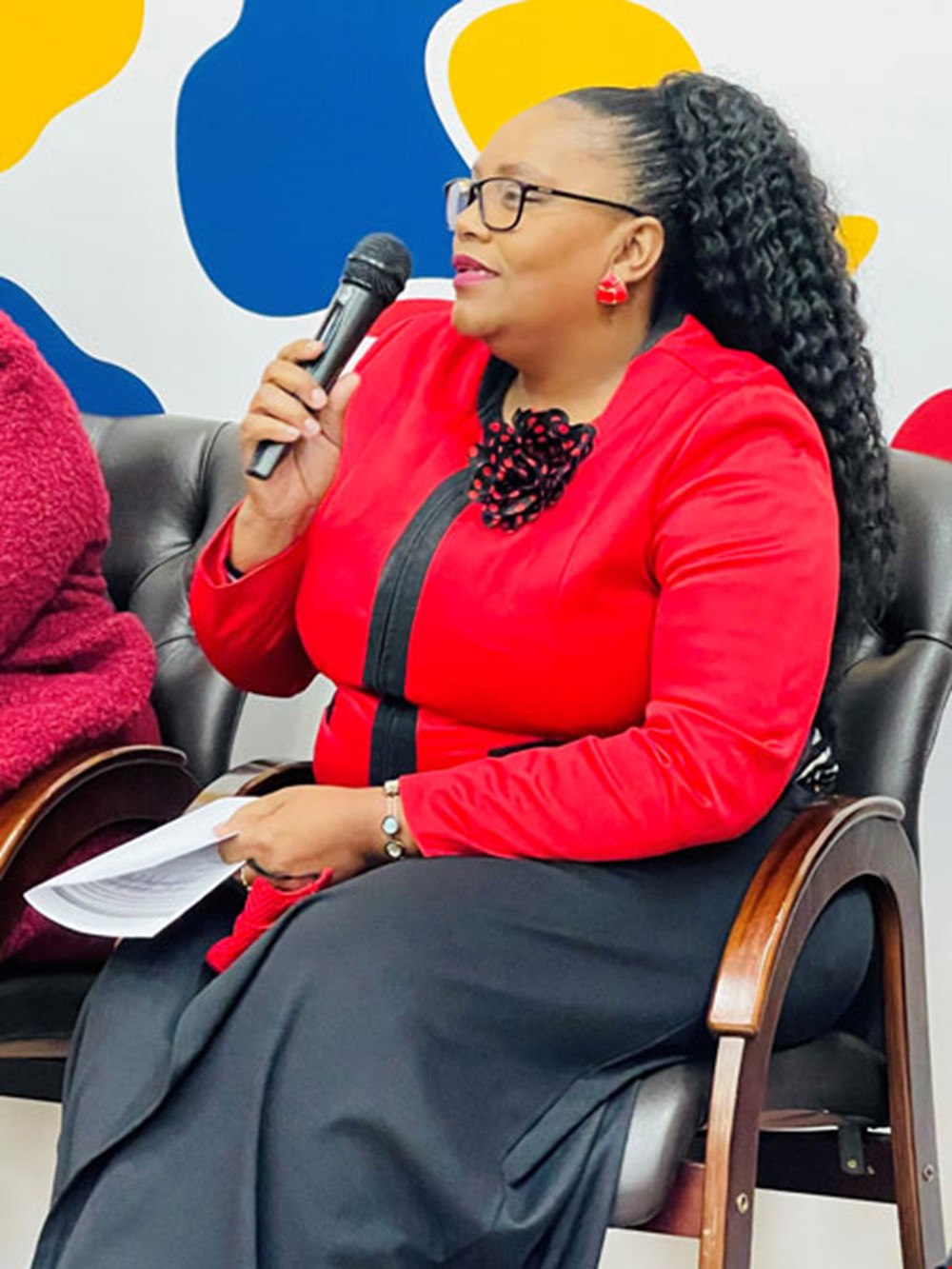
Ms Rethabile Maimane, farmer and Managing Director: The Golden Goose, pointed out the challenges of accessing the market, low cash flow, lack of funding, not producing foods that comply with the agricultural value chain, challenges in the value chain, graduate unemployment as risk factors in the agribusiness.
She further emphasised the struggles faced by farmers, and her wish to see government, academics and the private sector coming together in support of farmers. She mentioned that farmers produce in bulk and food products have a short life span, which she said, is a risk. “The high unemployment rate and non-economic growth mean that our products will end up in stacks, and we are the ones who will suffer the great loss and consequences of high production. Support a farmer, support a healthy lifestyle,” she said.
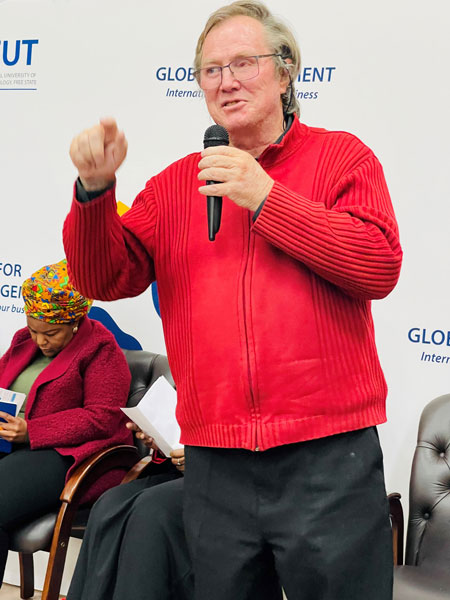
Mr Deon Joubert, a small-scale farmer from Farming in God’s Way Programme at Kingdom Ministries, highlighted the importance of healing the land and returning to the old ways of farming. He also underlined the significance of producing our food. He mentioned that Botswana has banned SA foods because they want to start producing their own food. He further encouraged societies to use mulch as fertilisers and rotate crops. “Do not plough, do not burn God’s blanket. Africa has the potential to feed Africa and the world. Let us do things differently. Let us heal the world and make it a better place for generations to come.”
Captions
1: Ms Rethabile Maimane, farmer and Managing Director: The Golden Goose.
2: Mr Deon Joubert, a small-scale farmer from Farming in God’s Way Programme at Kingdom Ministries.


