
News Articles
Tim Noakes presents his Diet at Research Day
Health and Environmental Sciences
CUT News
Research, Innovation and Engagement
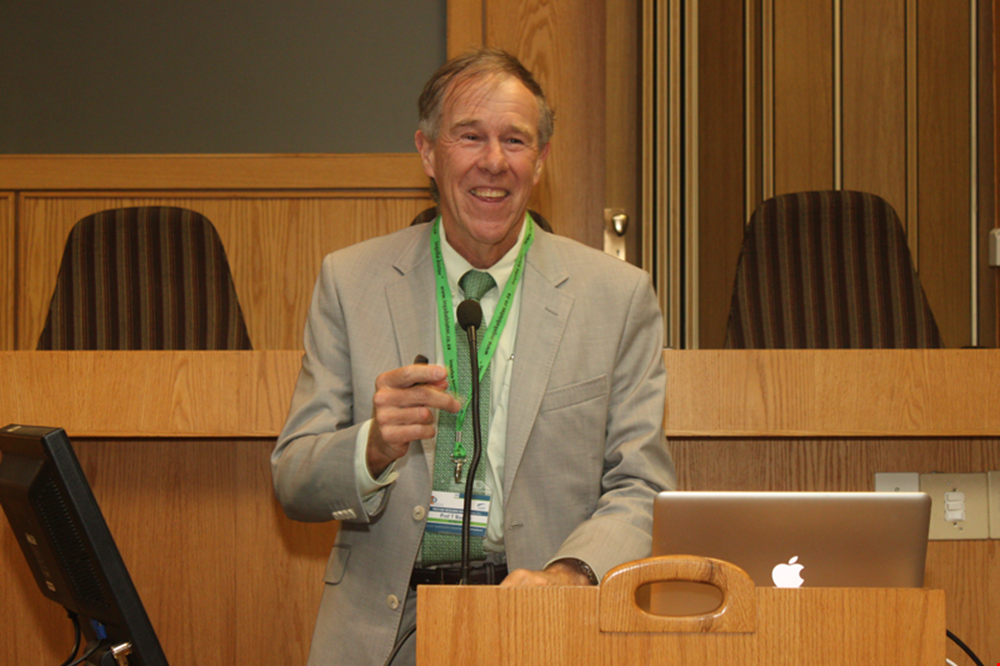
Faculty of Health and Environmental Sciences at CUT hosted a prestige research day on 29 October 2014; where researchers from the faculty and the University of Free State presented their papers alongside Professor Tim Noakes, a South African professor of Exercise and Sports Science at the University of Cape Town.
Tim Noakes is a Professor in the Discovery Health Chair of Exercise and Sports Science at the University of Cape Town, Director of UCT/MRC Research unit for Exercise Science and Sports Medicine and co-founder of the Sports Science Institute of South Africa (SSISA). A renowned author of many publications, Prof. Naokes has published more than 500 scientific publications and has been cited more than 14 000 times in the scientific literature. In 2008, he was elected an honorary fellow of the Faculty of Sports and Exercise Medicine in UK, which made him the first foreigner to be recognised. In 2012, he received the Lifetime Achievement Award from the National Research Foundation for his contribution to sports science research. At the age of 65, he still partakes in races of up to 21km and in his active lifetime, he has run more than 70 marathons and ultra-marathons including seven 90km comrade marathons.
During his presentation to a full to capacity hall, Prof. Naokes caught his audiences’ attention when he introduced his topic of the day “The greatest diet debate: Is the low fat diet the single worst medical error of the past 100 years?” He recommended the high fat diet to a high carb diet that is highly regarded in the health nutrition sectors. In his argument, he said that the cause for obesity and diabetes is due to provision of additive, highly processes foods that induce over eating in susceptible individuals. “Insulin produced by carbs prompts fat cells to accumulate fat. It is highly toxic to our bodies. We cannot develop a healthy nation if our children are exposed to high carbohydrate diets from an increasingly young age. The optimum development of the brain at all ages requires diets that are high in protein, and especially fat, and low in refined carbohydrates and processed foods destroys the gut flora,” he cited. He also made reference to the primitive years where he said, hunting and cooking allowed humans to extract nutrients from animals and vegetable sources. “The increased energy derived from these sources allowed the growth in human brain. The acquired calories, protein and fat were derived from fish, fowl and game animals.” When he explained the disadvantages of carbohydrates diet and the history behind it, Prof Noakes said that the human population has entirely replaced their nutritional traditional diet that have been in the food chain for over 3 million years with the undesired foods that are less than 100 years old.
He referred to the foods that were recommended after the second agricultural revolution in 1972. “Americans eat more carbohydrates and they are fat, South Africans are obese because starch is the basis of all their meals! Japan has the least obese population because they still value and follow a traditional diet. You cannot be healthy if you cannot cook, good health-care starts with real food” In conclusion, Prof. Noakes said that lack of physical activity does not make one obese stating that obesity is a brain disease. “You cannot regulate energy intake to equal energy expenditure. Controlling one’s “Bliss Point” is the key!” His advice to the audience was if they consider weight loss, they must cut on sugar, processed foods, and have less carbs. “25g of carbs is a recommended intake, one banana and an apple is enough carbs for a day, yes, they do not have calories but are rich in carbs.” The recommended read: The Real Meal Revolution -the low carb recipe book where he is a co-author. #ProfNoakesCUT
Image
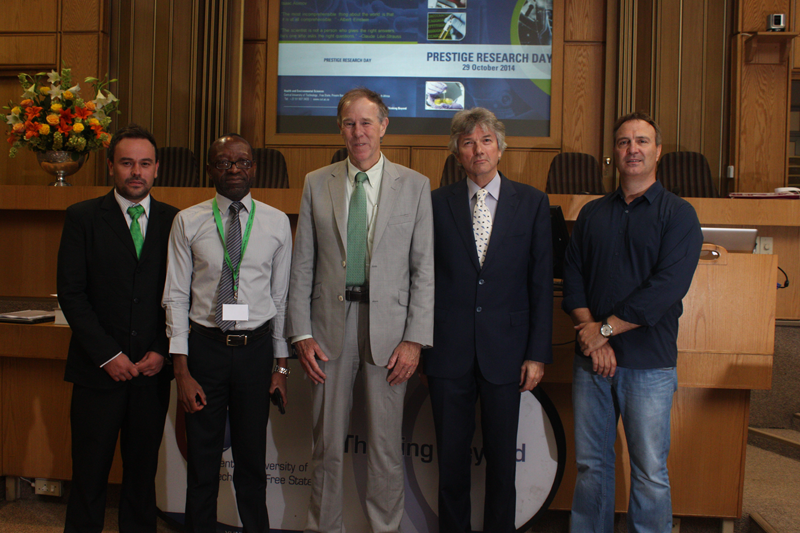
Mr Roan Slabbert, Lecturer and ECP Coordinator in the Department of Clinical Sciences (coordinator of the Prestige Research Day); Prof. Sam Mashele, Acting Dean: Faculty of Health and Environmental Sciences; Prof. Tim Noakes; Prof. Neil Garrod, Deputy Vice-Chancellor: Resources and Operations; and Prof. Ryk Lues, Professor in Environmental Health and Research Manager for the Faculty of Health and Environmental Sciences.
News


