
2nd International Teaching Week continues at the Bloemfontein Campus

Prof. Pamela Dube, Vice-Chancellor and Principal, emphasised that universities of the future must be more than places where knowledge is acquired; they must be spaces where knowledge is transformed into innovation, solutions and meaningful societal impact.
As International Teaching Week continues, it is strengthening the connection between local expertise and international perspectives, reinforcing the university’s commitment to delivering an education that is globally connected, innovative and responsive to the evolving needs of a rapidly changing world.
The programme champions teaching approaches that nurture creativity, critical thinking, problem-solving, innovation and an entrepreneurial mindset, equipping students not only with knowledge, but with the confidence, capabilities and adaptability to turn knowledge into meaningful impact.
In her remarks, Prof. Pamela Dube, Vice-Chancellor and Principal, emphasised the need for universities to rethink teaching and learning in response to technological advancements and the changing needs of society and the workplace. “The university of the future cannot simply be a place where knowledge is transferred. It must be a place where knowledge is acquired, transformed and converted into solutions.”
When highlighting the importance of teaching for impact, she added that the most effective teaching is not necessarily about how much content universities can deliver, but how effectively they can inspire students to think, create and have a passion for learning. She also called for international partnerships to move beyond engagements and deliver tangible outcomes for institutions, students and communities.
Guest speaker, Dr Nomkhosi Radebe spotlighted the Integrated Entrepreneurship Capability and Innovation Framework (ICES), a transformative model designed to embed entrepreneurship, innovation and capability development across teaching, learning, research and institutional strategy. She emphasised that entrepreneurship should no longer be treated as an optional or stand-alone subject, but as a core competency for every student, equipping graduates to identify opportunities, solve real-world problems and create sustainable solutions.
Developed in response to pressing challenges such as youth unemployment, rapid technological change and the growing demand for adaptable graduates, the ICES framework draws on research and lessons from universities across Africa and internationally. It seeks to address persistent gaps, including fragmented entrepreneurship initiatives, inconsistent implementation, limited monitoring and evaluation, and weak graduate tracking.
At its core, ICES is built around five interconnected domains which includes leadership and governance; curriculum and learning; staff development; ecosystem partnerships; and quality enhancement. Together, these domains promote student-centred learning, cross-sector collaboration and evidence-based decision-making.
Dr Radebe’s added “universities must move from simply teaching entrepreneurship to building an entrepreneurial culture. Our ultimate goal is to produce graduates who are not only knowledgeable and skilled, but innovative, opportunity-driven, critical thinkers, socially responsible and equipped to create meaningful impact in their communities and the broader economy.”
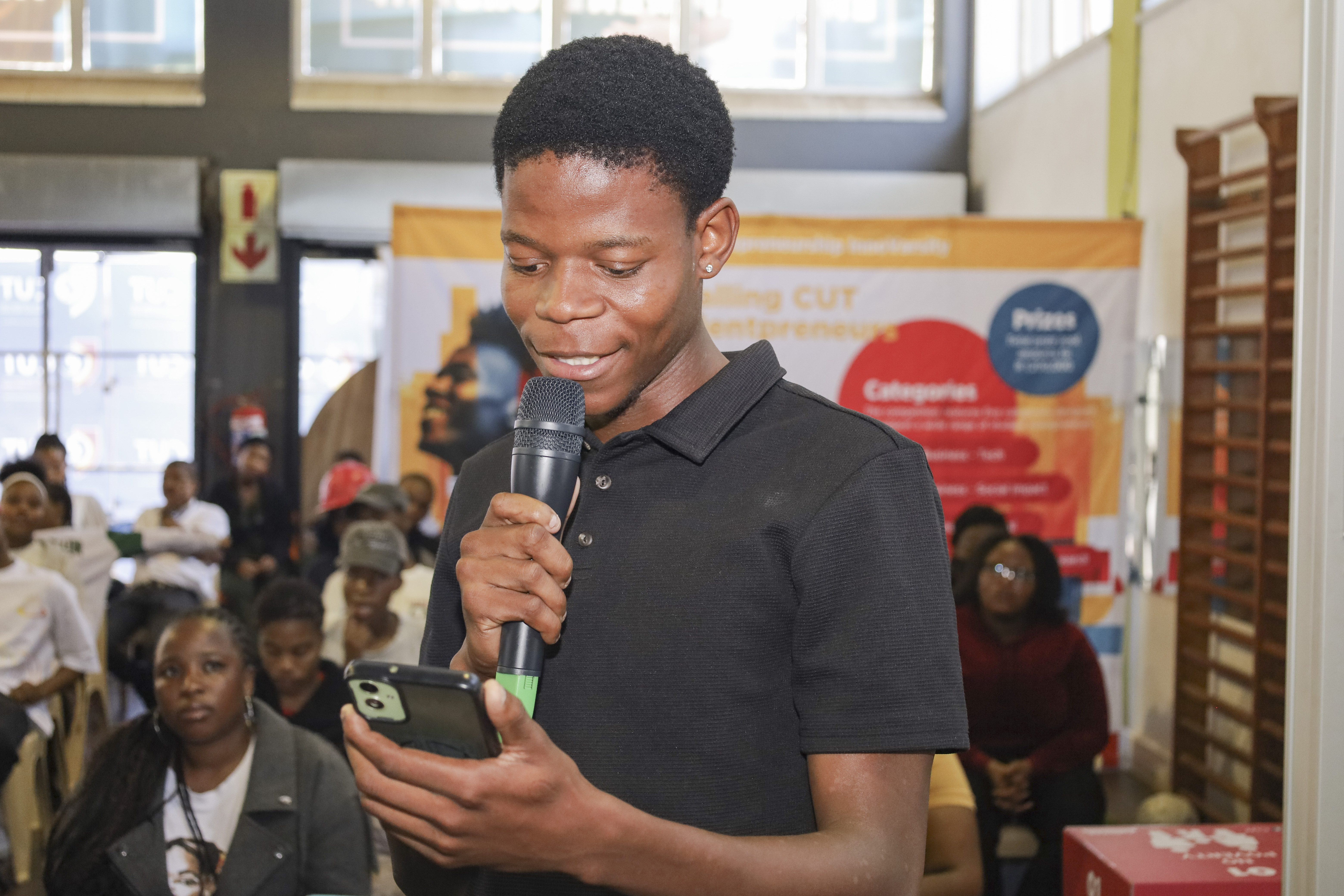
Youth actively engaged in discussions about their future, employability and the role of university–industry partnerships in tackling unemployment. The conversation highlighted the need to equip graduates with the skills, opportunities and networks to move beyond seeking jobs to creating opportunities and shaping their own tomorrows.
Panel discussions centred around the need for higher education institutions to adopt a more integrated, collaborative and future-focused approach to teaching and learning. Panellists highlighted the importance of strengthening partnerships between universities, industry, government and communities to ensure that academic programmes remain relevant, responsive and aligned with evolving societal and workforce needs.

Panellists highlighted the importance of strengthening partnerships between universities, industry, government and communities to ensure that academic programmes remain relevant, responsive and aligned with evolving societal and workforce needs.
They emphasised the value of experiential learning, entrepreneurship, community engagement, sustainability and the responsible adoption of emerging technologies, including Artificial Intelligence (AI), as critical components of preparing graduates for an increasingly complex world.
A key message emerging from the discussions was that tomorrow’s graduates will need more than technical knowledge and digital proficiency. “Our future graduates must also possess critical thinking, creativity, ethical leadership, adaptability and problem-solving capabilities to navigate uncertainty and develop innovative responses to complex economic, environmental and healthcare challenges.”

Students welcomed the opportunity to participate in the discussions, expressing their appreciation for gaining valuable insights into future opportunities, emerging skills and the plans shaping their journey beyond university.
The discussions called for universities to educate not only for employment, but for impact, empowering graduates to become agile thinkers, responsible leaders, innovative problem-solvers and active contributors to society and the economy.


