
CUT unpacks transformation plan
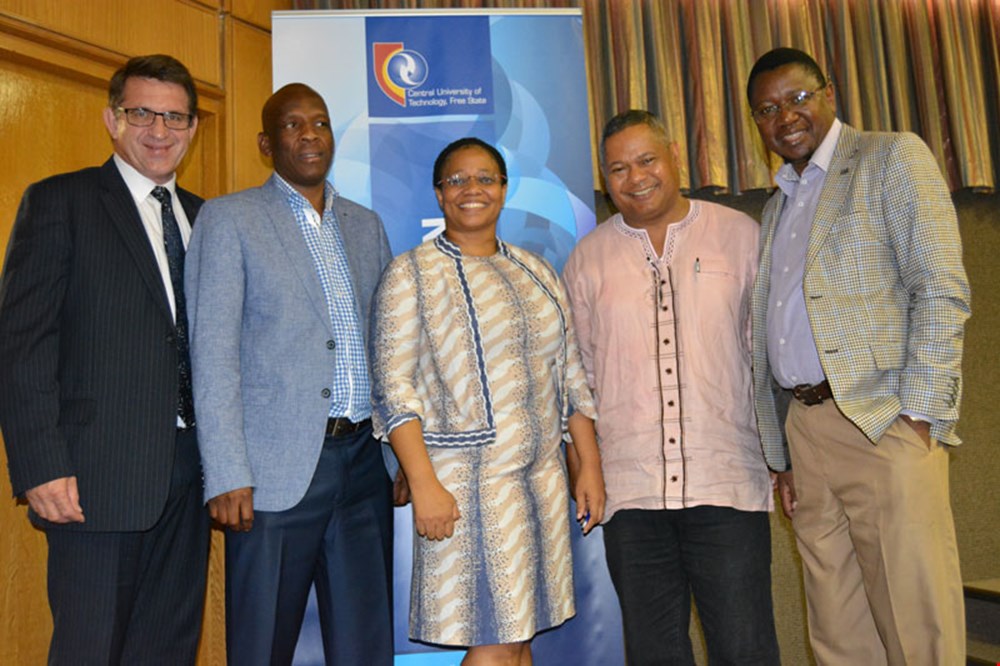
Transformation in higher education has been a pressing global issue and CUT is working hard towards becoming a transformed university. At the summit held on 10 May 2018, the delegates debated, unpacked and reflected on the burning issues. They relooked the current framework and tackled challenges that were impeding progress.
All institutional structures were represented including Institutional Forum, Senate, unions and student representatives from Welkom and Bloemfontein Campuses.
Prof. Henk de Jager, Vice-Chancellor and Principal said that CUT is in the process of changing towards the better, as some transformation work is visible in certain areas. “As a university, we cannot only be inwardly looking, we have to make an impact on our society. So far, we have achieved some success on the transformation path and have made a difference in the lives of the people by addressing these issues within our university.”
Prof. de Jager mentioned the innovation eco-system as one part of the projects developed to address challenges in the society. “Whatever we are doing here must have a positive impact either through teaching programmes, research, and innovation. There are still areas that need attention some of which are language policy matters, curriculum transformation, programme in qualification mix, articulation, teaching and learning, student learning support, NSFAS challenges, accommodation, safety, research and innovation, community engagement, equity between the two campuses, alumni programme, staff and students with disability in terms of accessibility, university processes and activity, capacity, challenge the status quo.”
He also said that universities are looking at reinventing transformation programmes to the ones that are goal-driven and mobilising active participation of staff and students. “Transformation is all about change and my dream is to see CUT become a transformed university committed to both individuals and the well-being of a wider society. We will be embarking on this process for the rest of this year and the results will be revised and aligned with the South African Human Rights Commission report on transformation within universities. I want the CUT community to strengthen the foundation and the building blocks of a University of Technology through courageous efforts in unity.”
Prof. Andre Keet, Chairperson of the Ministerial Transformation oversight Committee said that universities are key public institutions that generate different sets of social orders. “I am convinced about the importance of our public university sector in unfolding proper and deep democracy. Our investments and energies in the transformation project is a key national and regional priority looking at the African Union’s strategic plan for 2016.”
He further mentioned that universities lack the scholarship of transformation that has an empirical base to start working towards a certain direction. “We would like to have an in-depth discussion on what the project of transformation means for academic institutions based on academic and scholarly perspective so that we shift the core functions of the university around its research, innovation, engagement and teaching and learning. The key challenging issues in this sector are engaging in institutional culture, curriculum research, teaching and learning, equity and redress, diversity on social inclusion and community engagement. The other challenges are around the centrality of students, pragmatic as strategy, transformation unit, knowledge, research, pedagogy, hard versus soft science, scholarship of transformation, general and equality complaints,” he concluded.
Cllr Nkosana Dolopi, Chairperson of the Human Resource Committee of Council presented on poverty, gender inequality, racism, patriarchy and sexism. In his views, the transformation issue is not about gender or race but the system. “We need to distract the system. If what we inherited with these ugly demons is still intact, then the numbers of women and blacks represented will become an exercise for statistics and will not change our lives at all.”
He said that for the sake of peace, democracy, stability and progress, the state and institutions need to transform in pursuit of becoming concerted representations of societies and amplify all people. “If you don’t transform societies, there are risks of instability. Transformation is a must not a choice. What we need to do is to change the structure, deconstruct to reconstruct so that we attend to the challenges of poverty, patriarchy, inequality, racism and sexism.”
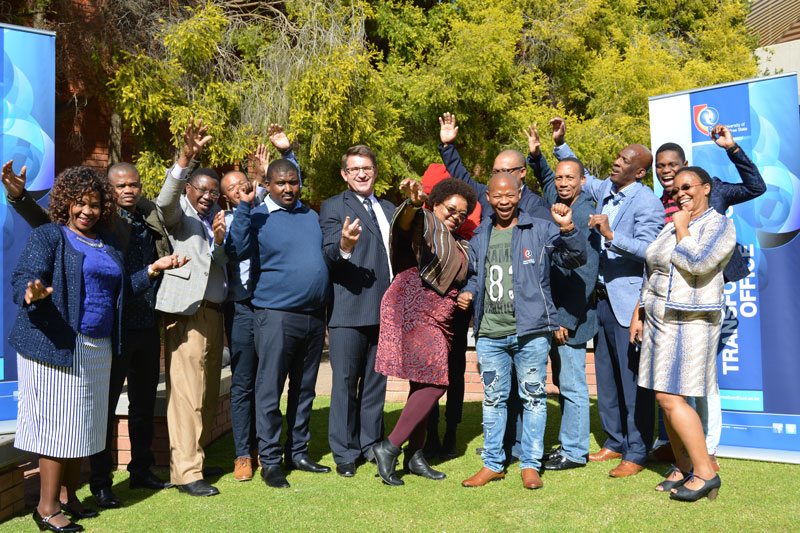
In conclusion, student representatives from both campuses, Mr Tshwaro Halter- SRC President Bloemfontein Campus and Mr Gladstone Moletsane- Education and Transformation Officer, Welkom Campus echoed the same sentiments on the need to urgently rollout transformation plans in the institution stating that the summit is not about criticising or blaming university leader but to ensure that the efforts made go a long way in serving the needs of students and contribute immeasurably to the communities. Mr Gladstone Moletsane further emphasised that the slow pace at which transformation is being rolled out at Welkom campus, lack of resources, academic programmes and facilities are some of the key factors that influence student uprisings.
Images
1: From left: Prof. Henk de Jager, Vice-Chancellor and Principal, Cllr Nkosana Dolopi, Chairperson of the Human Resource Committee of Council, Dr Choice Makhetha, Transformation Advisor, Prof. Andre Keet Chairperson of the Ministerial Transformation Oversight Committee and Prof. Luvuyo Lumkile Lalendle, Vice-Rector for Teaching, Learning and Quality Assurance: North-West University (NWU).
2: Attendees who engaged deeply in transformation issues within the institution.


