
News Articles
CUT takes lead in 3D printing for medical purposes
Engineering, Built Environment and Information Technology
Research, Innovation and Engagement
CRPM
CUT News
Leadership
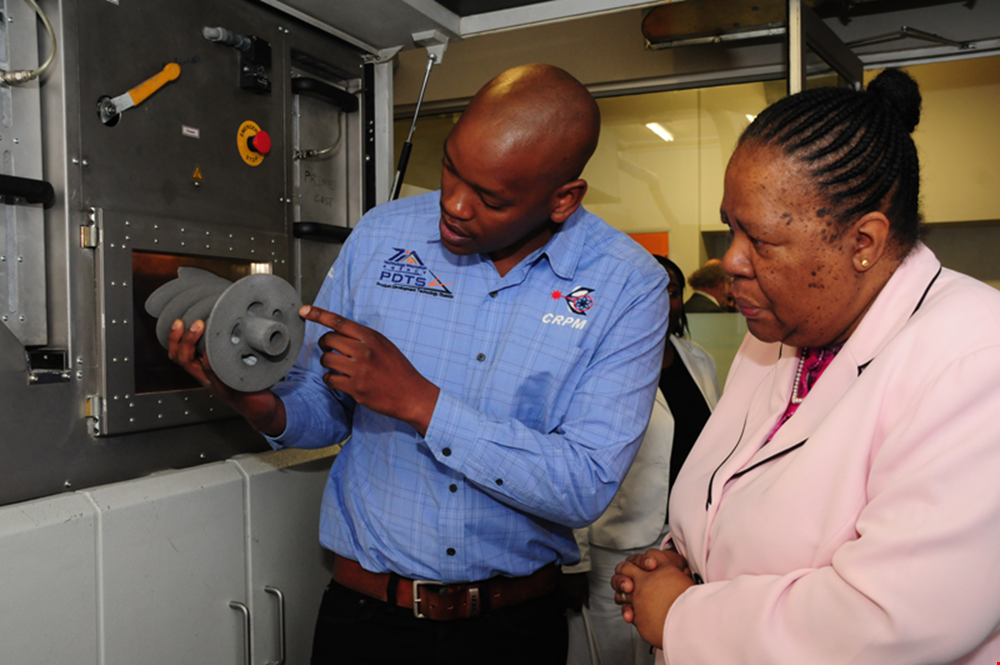
3D printing is revolutionising the medical field globally and it is no different in South Africa. Also known as "additive manufacturing", 3D printing for medical purposes is restoring the quality of life of people, particularly those with severe facial disfigurements as result of cancerous tumours or injury.
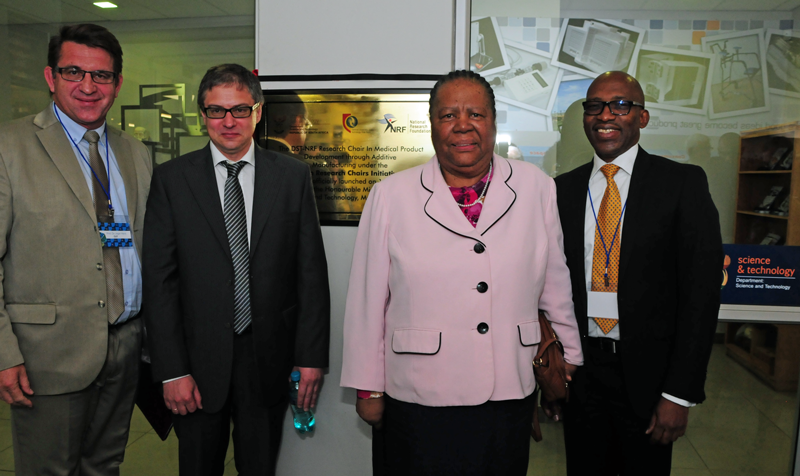
The Centre for Rapid Prototyping and Manufacturing (CRPM) at CUT is at the cutting edge of 3D printing or additive-manufacturing (AM) technology for medical purposes. The Centre does ground-breaking work in the design, development and manufacturing of medical devices using 3D printing, and has assisted 12 patients to date. Two of them had titanium implants installed into their jaws by doctors at Kimberly Hospital last year. These implants were printed layer by layer using the AM process to ensure they fitted perfectly into the individual jaws of each patient. The CRPM has recently been awarded a Research Chair in Medical Product Development under the Department of Science and Technology's South African Research Chairs Initiative (SARChI), the goal of which is to increase the research output and innovation in areas that are considered essential to the country's strategic growth and development. This Research Chair, under the leadership of Prof. Igor Yadroitsau, was awarded in recognition of the excellent work that CUT is doing in this dynamic and exciting field. Speaking at the launch of the chair, the Minister of Science and Technology, Naledi Pandor, said it was important for the country to continue to build a public environment supportive of higher education institutions: "As with many developing countries, South Africa faces the challenge of competing for leading scientists." The Minister added that South Africa's funding of public basic research had, however, risen sharply over the past 21 years, as university research was now closely linked to national priorities and global knowledge networks. Most of the DST's funding – well over R4 billion this year – was invested in people, said the Minister. SARChI alone had made R470 million available this year as part of increasing research capacity at the country's universities. The Minister said the CUT Research Chair in Medical Product Development would have a positive impact on research as a whole, and that more research projects would run concurrently to help strengthen knowledge and technological know-how in complementary research infrastructure.
Prof. Thandwa Mthembu, Vice-Chancellor and Principal of CUT, said "I am particularly pleased that CUT is taking the lead in innovations that will change the face of medical science in South Africa. The CRPM stands proudly at the forefront of innovation in this field." Prof. Yadroitsau said the Centre was also focusing on contributing to medical equipment development through the design of innovative devices and production through new AM techniques, in combination with conventional machining techniques. "AM makes designs possible that conventional methods cannot achieve, so we are definitely going to look into medical equipment development under this research objective, with an emphasis on patients with disabilities assistive devices," he said.
Images
1: Mr Letsoalo Letsoalo, Junior Project Engineer at the CRPM showed Minister Pandor some of the 3D printed items in the state-of-the-art facilities located in the Engineering Technology Building at CUT, Bloemfontein campus.
2: At the unveiling ceremony on 14 August 2015 is Prof. Henk de Jager Deputy Vice-Chancellor: Academic and Research; Prof. Igor Yadroitsau the research chair holder, Minister Naledi Pandor, and Prof. Thandwa Mthembu, Vice-Chancellor and Principal of CUT.
News


