
News Articles
CUT hosts Public Lecture in celebration of Africa Day
Students
Leadership
CUT News
Professional Services
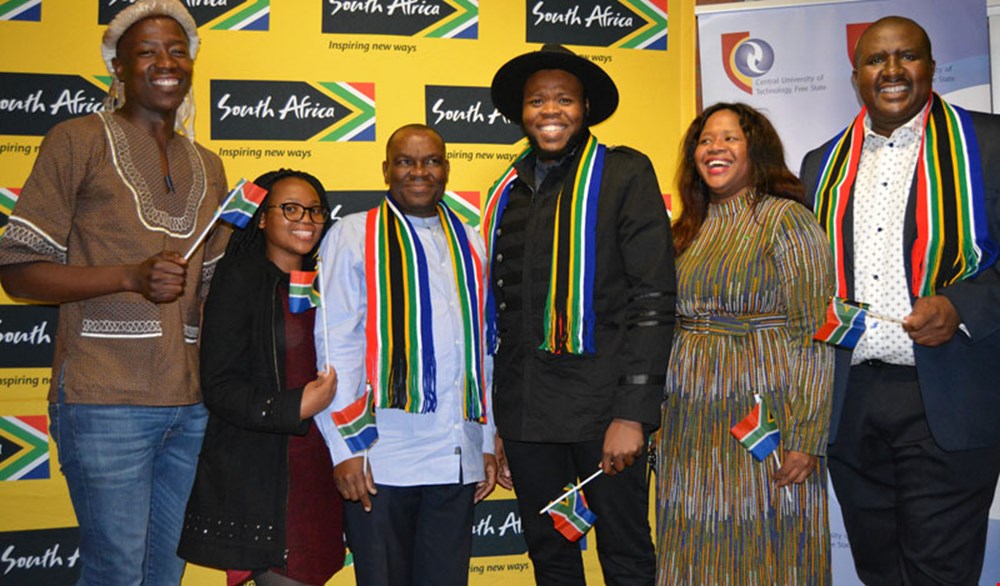
CUT in partnership with Human Rights Commission and Brand South Africa commemorated Africa Day on 25 May 2017. The year marks 54th Africa Day celebration, which has been observed annually since 25 May 1963. The day was initiated as a platform to acknowledge establishment of the African Union formerly known as the Organisation of African Unity, celebrate Africa's history, heritage, and culture. On the day, the university hosted a public lecture on Decolonisation of Curriculum steered by Dr Hleze Kunju, a distinct scholar and the first Rhodes University PhD student to write his thesis in isiXhosa.
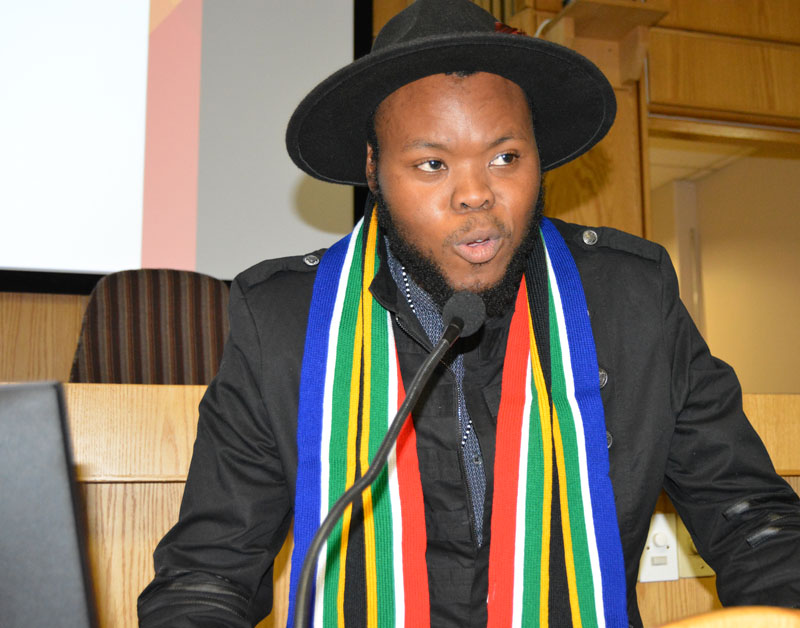
In his welcome address, Prof. Ngowi, Acting Deputy Vice-Chancellor: Research, Innovation and Engagement said the Public Lecture is set to become one of the most important calendar days in the institution and a yearly prestigious event in which acclaimed speakers in their respective fields of expertise engages with academics, policy makers, practitioners and social partners to stimulate and promote intellectual discourses. “This will allow us to dig deeper into our current challenges facing particularly higher education such as decolonization of our curriculum and understand how it will impact the sector in the future.” “Let us start where we are with what we have and move forward,” said Dr Hleze Kunju when he made his deliberations on the current challenges facing Higher Education He said that there has been a lot said about the issue but there has not been any action. ‘Inkonyana ikhethwa kusakhanya,’ isiXhosa phrase loosely translated as ‘take action while you still can’.
In his view, tertiary institutions should be a starting point for change where systems can be placed and information disseminated to lower schooling levels. “For me, learning in English is oppressive and a plan has to be made at university level to ensure that Africans are taught in their preferred languages and are able to access information thereof. African knowledge is marginalised and our curriculum does not respond to what we want. Our languages should be used in teaching and learning at tertiary institutions as there are many African stories that have not been told, and those stories can form part of our curriculum. There is so much in our cultures that are slowly dying and I believe that it is our responsibility to develop the African literature and universities need to respond to that.” The 31-year-old scholar, whose thesis entitled IsiXhosa ultimo lwabantu abangesonininzi eZimbabwe: Ukuphila nokulondolozwa kwaso (IsiXhosa as a minority language in Zimbabwe: survival and maintenance), said that his journey was not a ride in the park. He said that he faced many challenges including destructive criticism and limited African Literature. Despite all of that, his passion for Isixhosa and amaXhosa, the love for African languages, his experience of growing up in the rural areas and his stay in Zimbabwe where he discovered the amaXhosa population, drove and inspired him to do this thesis. “Today, I am content that I have tried to bring change and will continue to push the change forward with all I have. Don’t get me wrong, I believe in diversity, I believe in multiracial, multilingual and multicultural societies and I also believe in our rainbow nation, but I think that there are colours in that rainbow that are brighter than the others,” he concluded.
Another guest speaker, Ms Tony Gumede, Strategic Relationship Manager: Government Stakeholder Relations at Brand South Africa said that over the past years and months, universities have seen the youth standing up and showcasing revolutionary demands for relevant, decolonized education. She further said that universities are key in developing a nation and the continent and but the key challenge is how they implement this renaissance and create a new better view of Africa. “Today’s public lecture is a great step towards addressing these challenges and important towards full integration of decolonization of higher of higher education curriculum, and the integration of Africa back to itself. This is exciting and terrifying because as with change, the fear of the unknown and what lies in the future is what holds us back. Africa is yearning to liberate itself from the clutches of the past and our universities are home to many of our brothers and sisters from all across the African continent. It is imperative that we build on these relations, unify Africa and the African child.”
Images
1: Dr Hleze Kunju delivering a lecture on Decolonisation of Curriculum. 2: At the public lecture: CUT SRC President, Mr Thapelo Ngozo, Ms Shirley Mlombo, SAHRC Acting Provincial Manager, Prof. David Ngidi, Deputy Vice-Chancellor: Teaching and Learning at CUT; Dr Hleze Kunju, Guest speaker; Ms Toni Gumede, Strategic Relationship Manager: Government Stakeholder Relations at Brand South Africa and Mr Thabo Mongake, representing one of the event partners.
News


