
CUT Faculty brings business, and community together
CUT is committed to living its vision as an engaged university by producing social and technological innovations for socio-economic development of the central region. CUT has made laudable progress in steering its focus towards working with government and industry to make a tangible impact in the region.
The triple helix in regional development is steadily coming into a reality in the central region as government, business and institutions plan and collaborate at different levels to create a self-reinforcing dynamic of knowledge-based economic development.
The Faculty of Management Sciences in collaboration with Black Management Forum in the Free State hosted a seminar on 18 May 2018 where SMME’s, industry, government departments and corporate leaders from all the different sectors in the Free State Region were in attendance.
The seminar provided a brilliant platform for participants to highlight critical business challenges and solutions that will propel the region to greater heights.
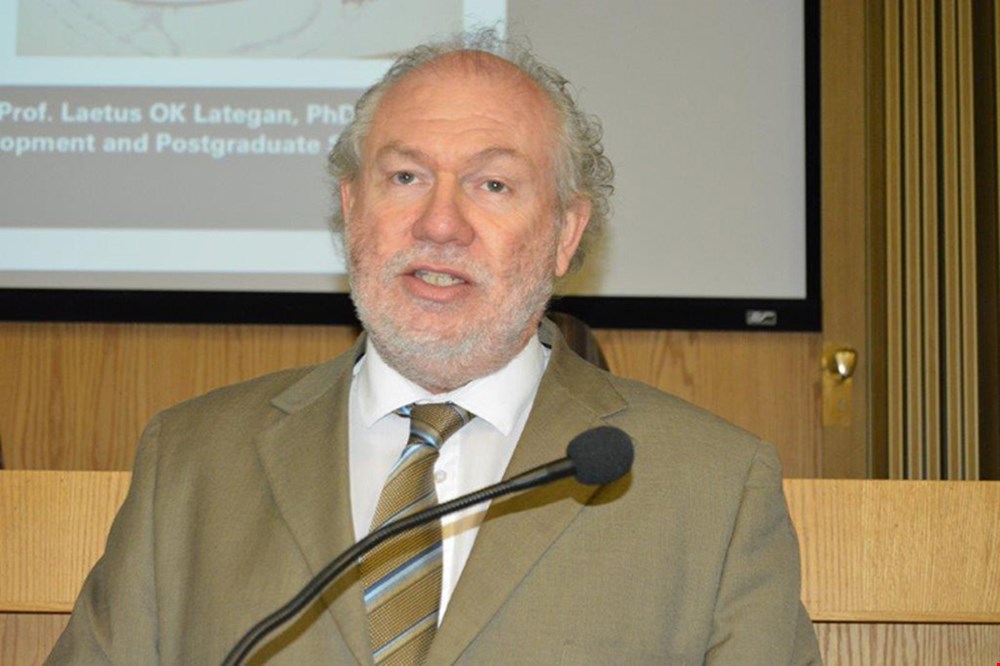
Prof. Laetus Lategan, Director: Research, Postgrad Studies said that knowledge is the electricity of the century and universities together with the corporate world are the developers and creators of that knowledge. “Universities of Technology addresses societal problems through application of the knowledge they generate and you as business play an important role in that regard. There is a value chain where we try to link the world of business and universities. We cannot be successful, relevant and speak the real-world problems if we do not have the industry as partners to assist us in identifying problems and come up with solutions.”
He said that the institution has identified seven strengths in which they can collaborate on, he mentioned 3D printing, smart cities, food security and sustainability of food resources, quality of health and living, understanding diversity in the educational context, understanding the type of research conducted and how they influence the system and enterprise development.

Mr MB Tshabalala, Black Management Forum Young Professionals Chairperson, said that SMMEs are the key drivers of employment and job creation, but are still faced with many challenges in the province which he said includes ineffective support, red tapes, profitability and sustainability, lack of skills and access to funding. Mr Tshabalala also emphasised that the possible solutions to these problems may include centralisation of all funding government institutions and departments dealing with business. “We need township economy revitalisation where we re-visit and re-plan the township economy, have mentors for each business, and prepare them to be expert.”
Ms Lize Labuschagne, CEO of Corporate Payroll Institution (CPI) shared her story on how she became an entrepreneur. She said that the current biggest challenge is students who graduate with no experience and are not market ready. “CUT has embraced the future and is one of the first universities to partner with CPI on virtual real-world training for students where we equip them with necessary skills and experience. Each student logs on to our online system where we have real work simulations. With this exposure, we are creating graduates who are employable and ready to face the world.”
Mr Itumeleng Moses, Director: Economic Analysis in the Free State Treasury Department commended CUT for showing determination and consistency in striving to take the Free State province forward. He also said that lack of evidence in policy making, sufficient research culture and practice, and dissemination of research findings in government poses a challenge. “This gives us a sense that we need to collaborate more and leverage from existing resources, form new alliances and revive the existing ones. We also need an intervention in skills development, enhancing the capacity of local people and look at how best we can interpret radical economic transformation as a province to come up with laudable solutions to enhance the economy,” he said.
Images
1: Prof. Laetus Lategan, Director: Research, Postgraduate Studies said Universities of Technology addresses societal problems through application of the knowledge generated and business play an important role in that regard.
2: Representative from the industry engaging speakers.


