
CUT and FS Legislature join forces to bring change

Building strong and lasting partnerships with business, industry, government and the community is key to the development and advancement of institutions of higher learning around the globe.
On 27 August 2018, the Central University of Technology, Free State (CUT) and the Free State Legislature signed a Memorandum of Understanding (MoU) in the view of contributing to the socio-economic development of the Province.
The main objective of the signing was to establish a framework for the negotiations of the proposed cooperation, which include, but not limited to training in research methodology issues relating to legislature processes, procedures, programmes and projects, practical application of policy and programmes analyses in Legislative mandates. Furthermore, the practical implementation of project management within the legislative context monitoring and evaluation of programmes and projects, analysis of Free State Legislature documents emanating from the Executive Council for effective oversight function and the development of training programmes for capacity building of the Free State Legislature staff.
In his welcome address Prof. Alfred Ngowi, Deputy Vice-Chancellor: Research, Innovation and Engagement said that CUT cannot work alone in its contribution to the development of the province and the lives of the people.
“In order for us to constantly produce good results and have an impact in the province, we need partnerships. When we to join forces, we believe that you have the same kind of mission as ours and hope that through our project management programme, your organisation will be able to provide more effective and efficient service. This is a great occasion for us to be able to exhibit our vision 2020, as we want to position ourselves as an entity that is committed to uplift socio-economic and technological innovations for the province. We constantly strive to get good ideas into business and apply what we research on.”
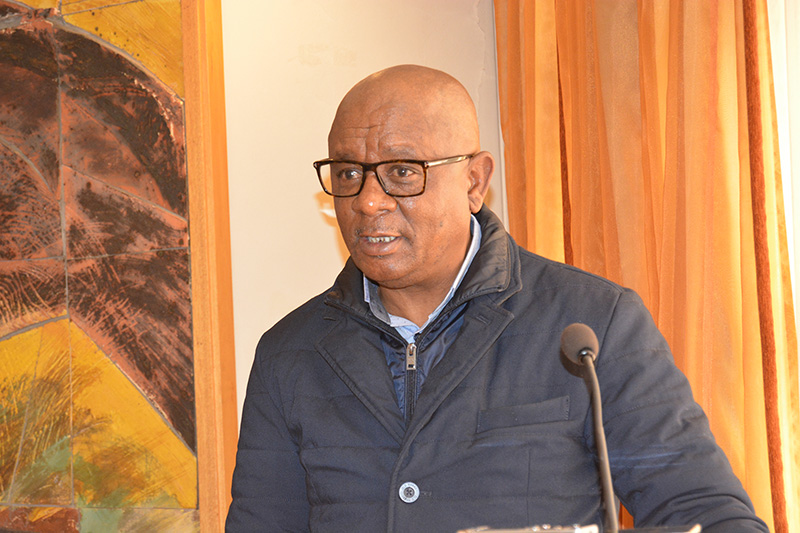
Mr Leonard Mofokeng, Secretary of the Free State Legislature, said that in South Africa legislatures have two decades of existence in which they have had a system that worked towards ensuring the implementation of their core functions which include: lawmaking, oversights and public education and participation.
“Despite the successful implementation of these core functions, we have identified functional and operational challenges such as the continued review of systems and operations of the legislature, implementation of structured legislative, operational plans and most importantly, the empowerment and knowledge management of human capital of the legislature. Following on the resolution of the national speakers forum on the adoption of the sector oversight model, legislatures were challenged to device legislative means as strategies geared towards fulfilling the obligations of the constitution of providing the necessary services to the inhabitants’ of the province.”
He further said that traditional theories and practices were known to be two separate concepts, but global challenges today compel to simultaneously merge and fuse the two, as they complement one another. “Therefore, while advocating theory, we simultaneously have to include practice. This MoU seeks to repurpose the operations of our committees in the legislature to ensure effective and efficient oversight on the executive while ensuring informative and educative public participation to the inhabitants of the province.”
He mentioned that the collaboration would mainly focus on research methodologies and modalities relating to legislature process and procedures, practical implementation of project management in legislature, quality report writing within the legislative framework, training and capacity building for staff of legislature.
“With these concepts in mind, we believe we will also be addressing the challenges of the fourth industrial revolution, the artificial intelligence which compels the merging of theories and practices and addresses the global dynamics within our areas of work. I would take it upon myself to impart these fundamental relations with CUT to our colleagues in other legislatures and hopefully CUT could be regarded as the gateway to creativity and innovation within the legislative sector of South Africa and eventually device an academic programme for the management of legislatures in South Africa. It is our gratitude to be part of this nation-building programme between CUT and the Free State Legislature, and we would like to add that both institutions are established with the sole purpose of doing good to other human beings,” he concluded.
Images
1: Prof. Alfred Ngowi, Deputy Vice-Chancellor: Research Innovation and Engagement; Mr Leonard Mofokeng, Secretary; and Adv Joseph Machaka, Deputy Secretary from Free State Legislature.
2: Mr Leonard Mofokeng, Secretary: Free State Legislature.


