
News Articles
Academics give way to Foundation Provisioning programmes
Teaching and Learning
CUT News
Conferences | Seminars | Workshops
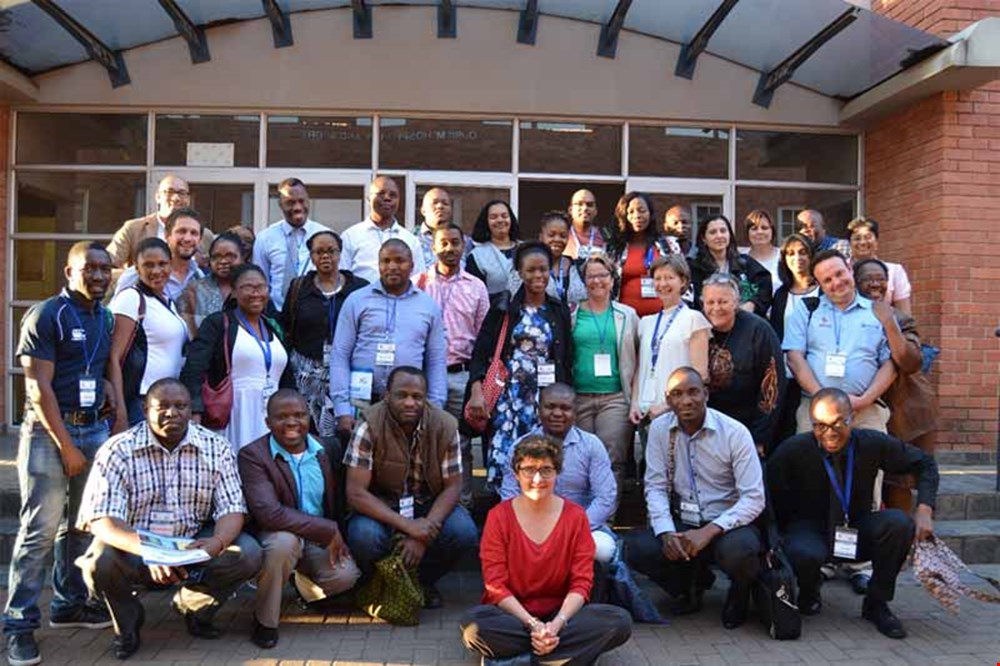
On 30 and 31 August 2016, CUT hosted 11 South African universities for the 2016 Annual Foundation Provision Colloquium. The purpose of the annual colloquium is to create a platform where academics could share and disseminate their best practices and research findings with regard to innovative teaching, learning strategies, research, monitoring and evaluation of foundation programmes.
In his welcoming note, Prof. David Ngidi, Deputy Vice-Chancellor: Teaching and Learning said that the need for introducing foundation programmes is aimed at reducing student drop-out rate and thereby increase throughput rate specifically for students who might not have had the opportunity to obtain the qualification within record time. “At CUT, we always seek ways and initiatives that play a role in improving our students’ performance to ensure access with success. Therefore this colloquium is viewed as one of those information sessions that not only promote the need for introduction of foundation programme but also as a strategy of sharing innovative ways of improving on our foundation programmes,” he said. Ms Hannelie van Rensburg, Director for Academic Planning, Monitoring and Evaluation of Higher Education at the Department of Higher Education and Training (DHET) said that the academics need to ask themselves why there is a need for extended curriculum programmes and what their role is. She also said the programme aims to achieve concepts related to smooth integration of students into the university systems to bridge the gap between high school and universities. “Schools don’t do comprehension tests anymore and that leaves learners clueless with regard to analyzing, comprehension and application.”
She further said that South Africa still faces issues of redress because it is always assumed that the education standard in model C schools is better than that of rural and township schools, which she said, “the assumption is probably correct.” Ms Van Rensburg also mentioned that there is limited but reliable evidence that students in the foundation provision programmes are able to catch up and often supersede the performance of the mainstream students after the fourth semester. Prof. Moloko Sepota from UNISA said that he sees the concept of foundation programmes as an abstract element that still needs to be unpacked. “When extended degrees were introduced, there was a general feeling amongst members of the public that this was a waste of money and state resources and unfair particularly for the poorest of the poor members of the community. Looking back at the Higher Education system now, we realized that a lot still needs to be done to produce a substantial number of graduates. The greatest challenges we face include many students who stay for too long in the system without graduating. Those that do not stay long, drop out of these institutions without completing their studies as a result, they end up without any qualification that will help them become employable. As such, it is imperative that we do some introspection and get to the bottom and foundation of challenges we are faced with. The challenges may warrant intervention strategies in the form of student support,” he concluded.
Image
Attendees from 11 South African Universities who attended the 2016 Annual Foundation Provisioning Colloquium with Ms Hannelie van Rensburg from the Department of Higher Education seated in front.
News


